Part 1 - Company Memory
Context Is the New Competitive Advantage
Agents without context are just faster interfaces to fragmented knowledge. The real advantage is the clearest, most connected, most usable business memory.
January 28, 2026
Draft essay
The Agentic Practice
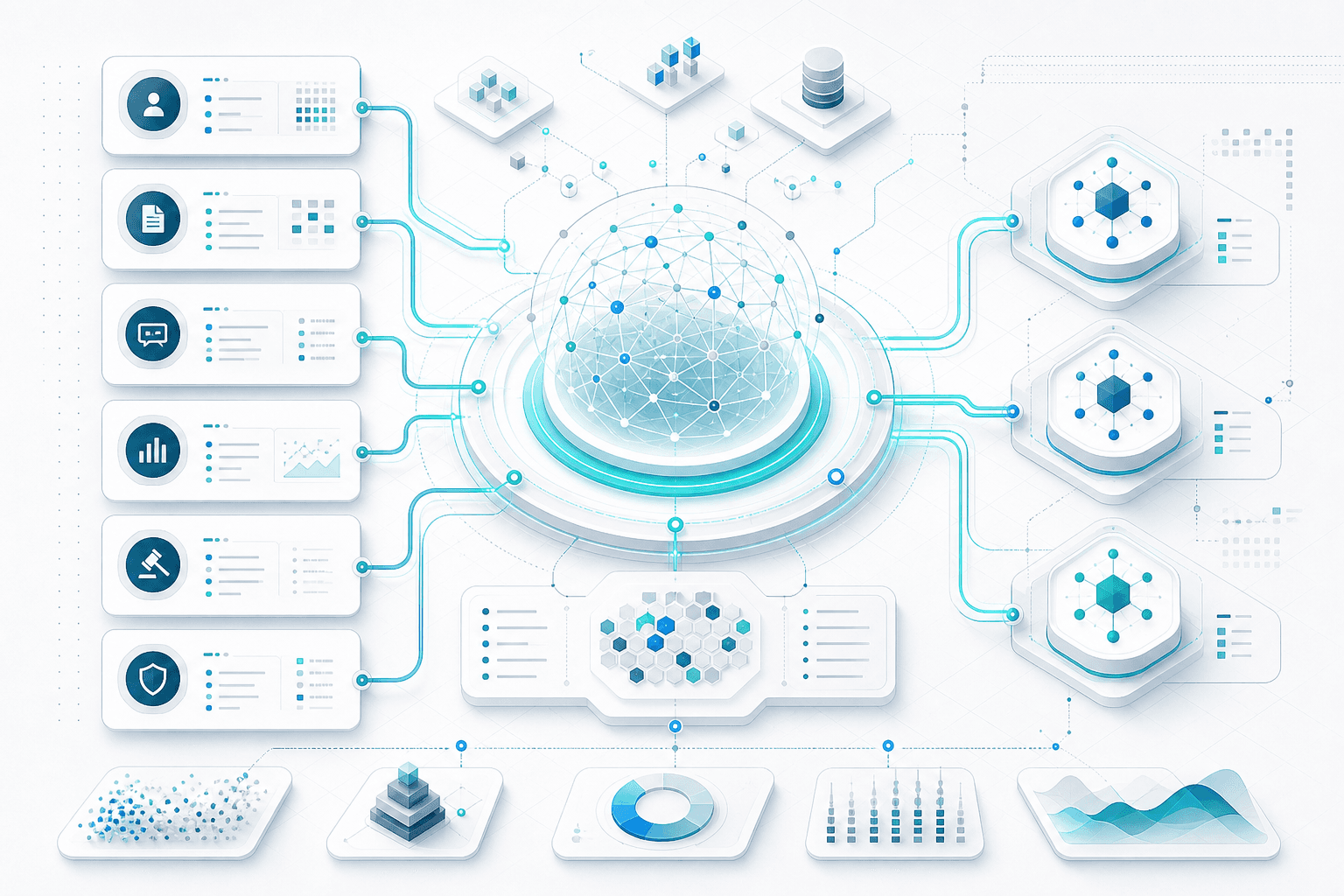
Agents are only as useful as the context they inherit.
Retrieval is not the same as understanding.
Company memory is becoming business infrastructure.
The first question most companies ask about agentic AI is a tooling question.
What agents should we build? What tasks should we automate? What systems should we connect?
Those are useful questions, but they are not the first ones. The better starting point is simpler and harder:
What does the agent need to know to do the work well?
That question moves the conversation away from AI as a feature and toward AI as an operating model. The real advantage in the agentic era will not come from having the most AI features. It will come from having the clearest, most connected, most usable business context.
Context Is Not Content
Companies do not usually suffer from a lack of information. They suffer from fragmented context.
The brand strategy is in a deck. The product truth is in documentation. The customer insight is in calls. The campaign plan is in a brief. The objections are in sales notes. The proof points are in case studies. The legal constraints are buried in approval threads. The performance signals live in dashboards.
AI can retrieve pieces of that information, but retrieval is not the same thing as understanding. A useful agent needs to know how those pieces relate.
A campaign brief is content. Why the campaign exists is context. A product page is content. Which buyer pain it maps to is context. A case study is content. Which proof point it supports is context.
Companies Need Memory
This is why the most interesting AI conversations are shifting from prompt-response toward persistent memory. Andrej Karpathy's LLM Wiki idea and Garry Tan's GBrain schema point at the same pattern: useful AI systems need a durable place to accumulate knowledge, decisions, relationships, and operating context.
Not because every company needs the same tool. Because every company needs the same capability: a shared memory layer that agents can inherit instead of starting from zero.
The Company Brain
A B2B company needs a memory layer that connects products, audiences, buyers, industries, use cases, claims, proof points, objections, competitors, campaigns, decisions, performance signals, policies, and approved language.
The value is not simply storing these things. The value is making their relationships explicit enough that an agent can reason across them.
If a product claim depends on a specific proof point, the agent should know that. If a message works for one industry but not another, the agent should know that. If a phrase has been approved by legal, the agent should know where it can be reused and where it needs review.
Without Context, Agents Accelerate Inconsistency
An agent can generate more content. It can prepare more sales briefs. It can summarize more research. It can personalize more emails.
But if each agent is working from partial context, the company just becomes faster at being inconsistent.
The problem is not that the agent is weak. The problem is that the company has not made its own operating knowledge coherent enough to be reused.
Interactive · The context dial
Same agent, same task — turn the dial.
task: draft the Acme renewal email
Draft output
“Hi Acme team, hope you're well! Just checking in about your upcoming renewal. Let us know if you'd like to chat about pricing!”
Fluent, generic, and interchangeable with every other vendor's email.
The Human Role Becomes Context Stewardship
In this model, humans do not disappear from the loop. Their role becomes more important.
Humans decide what should be remembered, what should be trusted, what should be retired, what should be updated, what requires review, and what agents are allowed to act on.
Context becomes more than background information. It becomes infrastructure.
The companies that win will not simply deploy more agents. They will build the clearest memory of how their business works, what their customers need, and what their teams are allowed to say and do.
Agents do not create that advantage on their own.
They inherit it.
Interactive · Ask this article
Every essay here answers for itself.